The AxiomDR Platform
Axiom Disaster Recovery (AxiomDR) is the evolution of DisasterSight.com — a real-time, AI-driven command and analytics environment that ingests and interprets massive volumes of disaster intelligence data to streamline field operations, accelerate response times, and unify multi-agency restoration efforts.
How It Works
1️⃣ Data Ingestion & Aggregation
DisasterSight ingests terabytes of structured and unstructured data in near real-time from a wide range of field and remote-sensing sources:
- Drone imagery & LiDAR point clouds from GFI Ascend survey flights
- Satellite feeds (WorldView, Sentinel, PlanetScope) for before-and-after analysis
- Cell tower, power, and fiber infrastructure telemetry through partner APIs
- Weather radar & NOAA storm path datasets
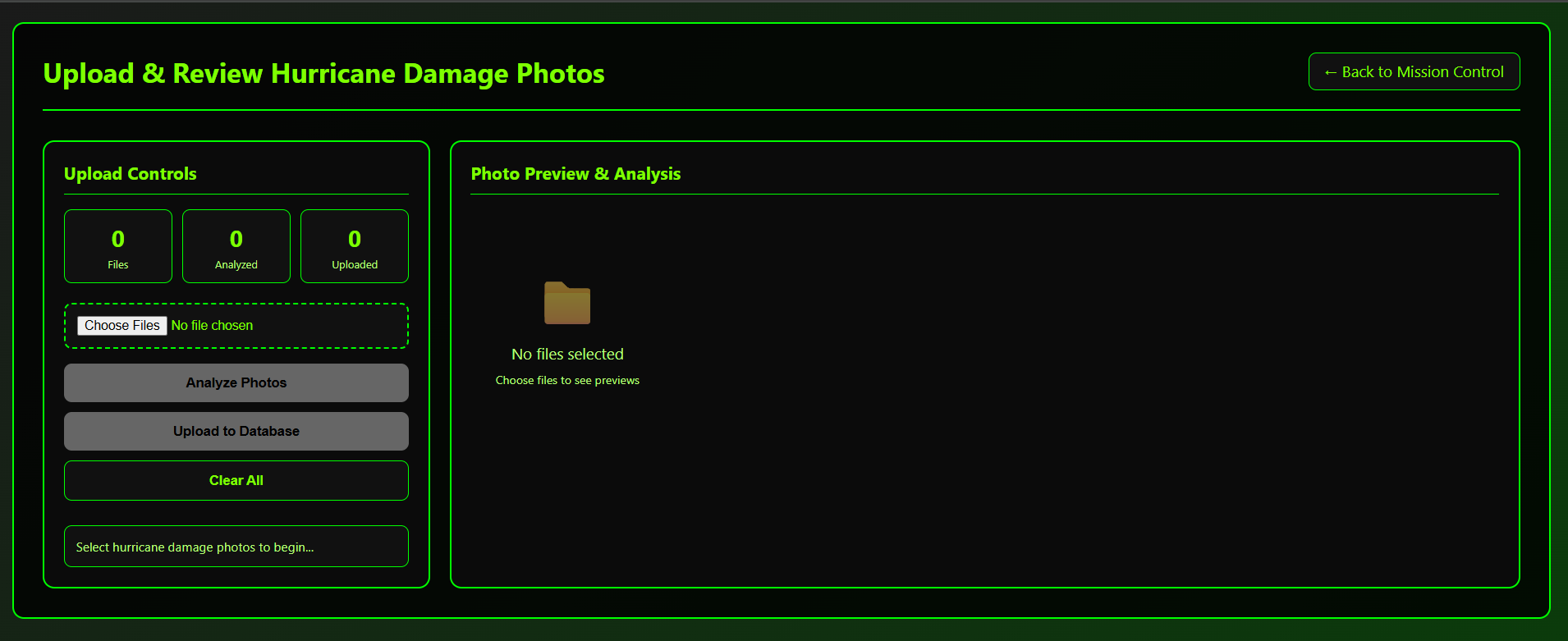
- Field crew photo and form submissions uploaded via the AxiomDR mobile interface
The ingestion engine uses parallelized ETL pipelines — leveraging PHP/Node microservices, MySQL, and Mapbox vector layers — to normalize incoming datasets into a unified geospatial schema.
2️⃣ AI Damage Classification
Once imagery and telemetry arrive, the system automatically routes them to AxiomDR’s AI Damage Assessment Core. Using trained convolutional and transformer models (Azure Vision, YOLOv8, custom ONNX pipelines), it identifies and tags:
- Line and pole damage, fiber or power line breaks
- Flooding and vegetation encroachment on right-of-way corridors
- Downed infrastructure components and hazard zones
Each item is scored by confidence value and assigned a
critical, severe, moderate, or minor rating.
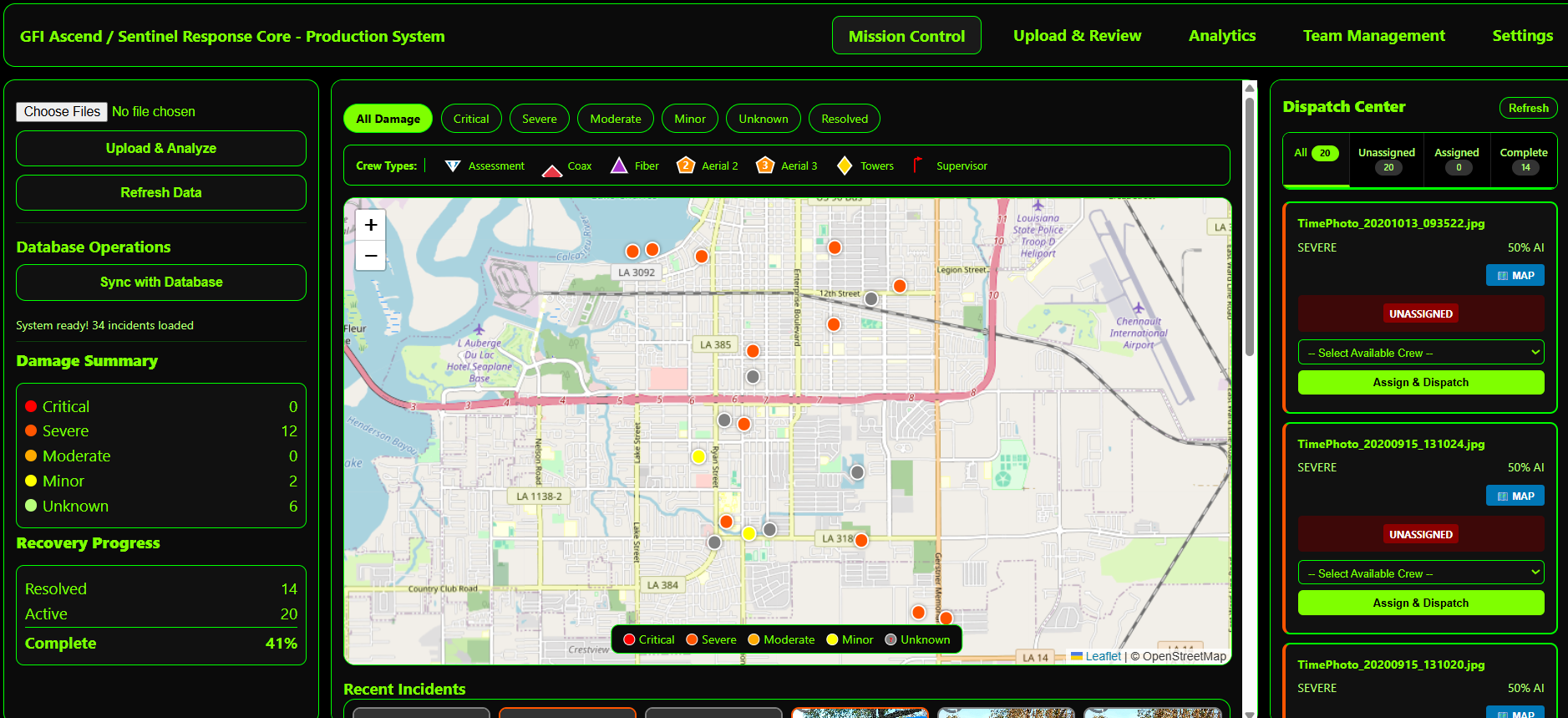
These are stored as geospatial features in the incidents database and displayed as clickable points on the map.
3️⃣ Automated Dispatch & Workflow
AxiomDR integrates a powerful Automated Dispatch Engine that analyzes incident severity, proximity, and available resource types to assign restoration crews automatically.
- Priority rulesets determine which incidents dispatch first (critical → severe → moderate).
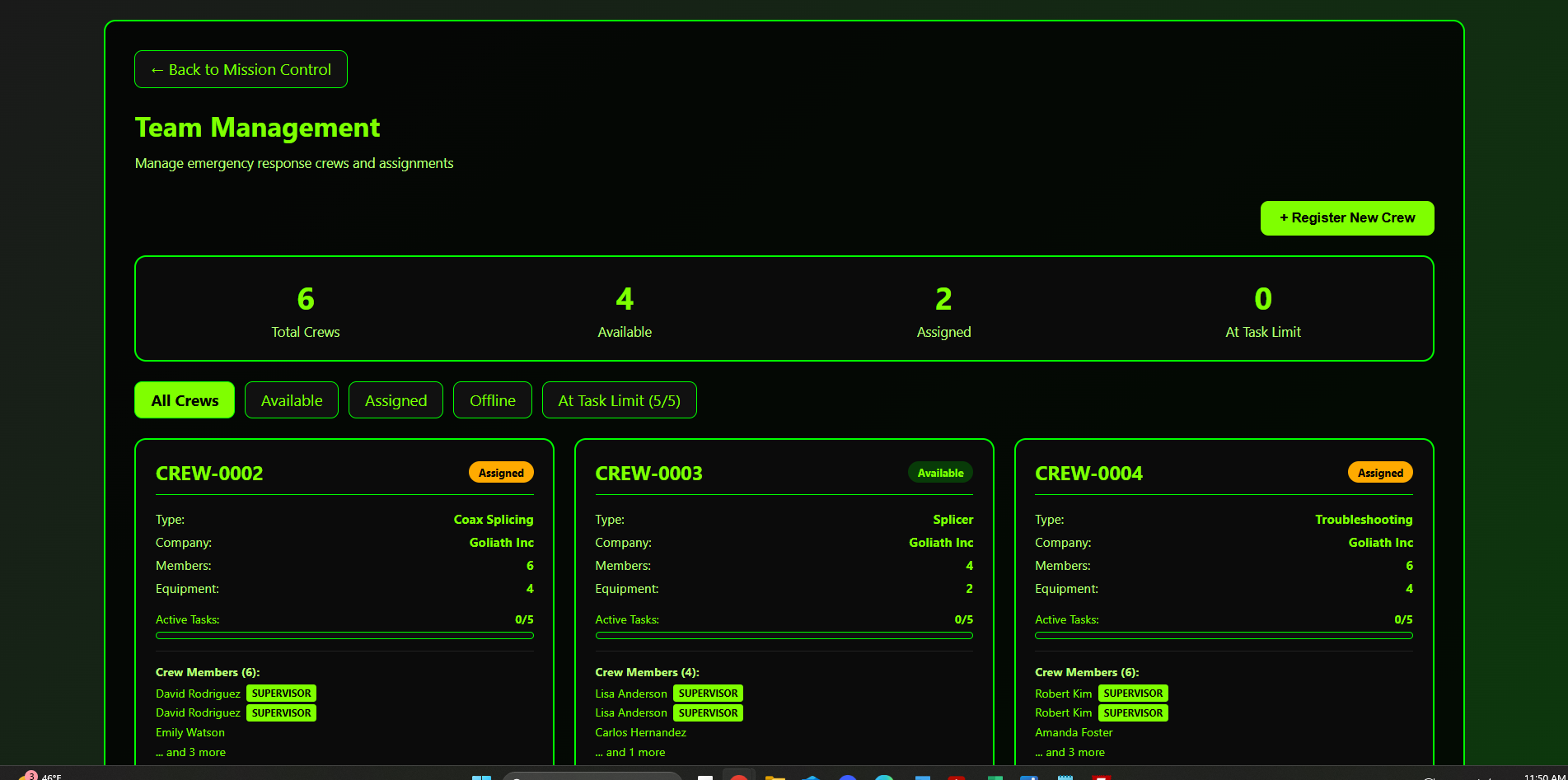
- Available crews are pulled from the AxiomDR workforce database, filtered by region, certifications, and equipment type.
- Dispatches trigger Twilio SMS and Slack alerts to supervisors and generate live status updates within Mission Control.
- Arrival times, travel durations, and on-site progress are tracked automatically through GPS pings or manual crew updates.
The result: dispatch decisions that once took hours now occur in seconds — with a transparent audit trail and live coordination view.
4️⃣ Unified Mission Control
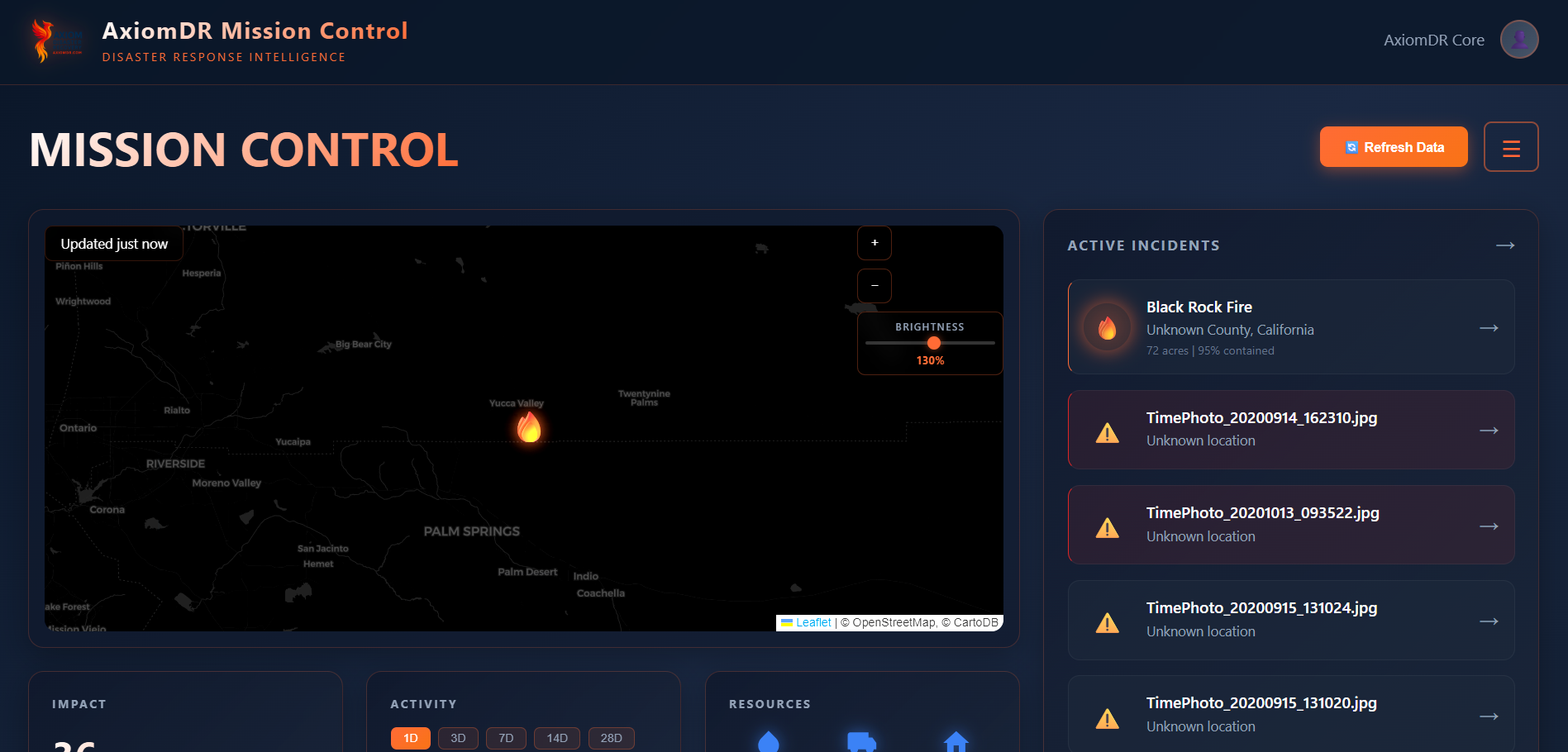
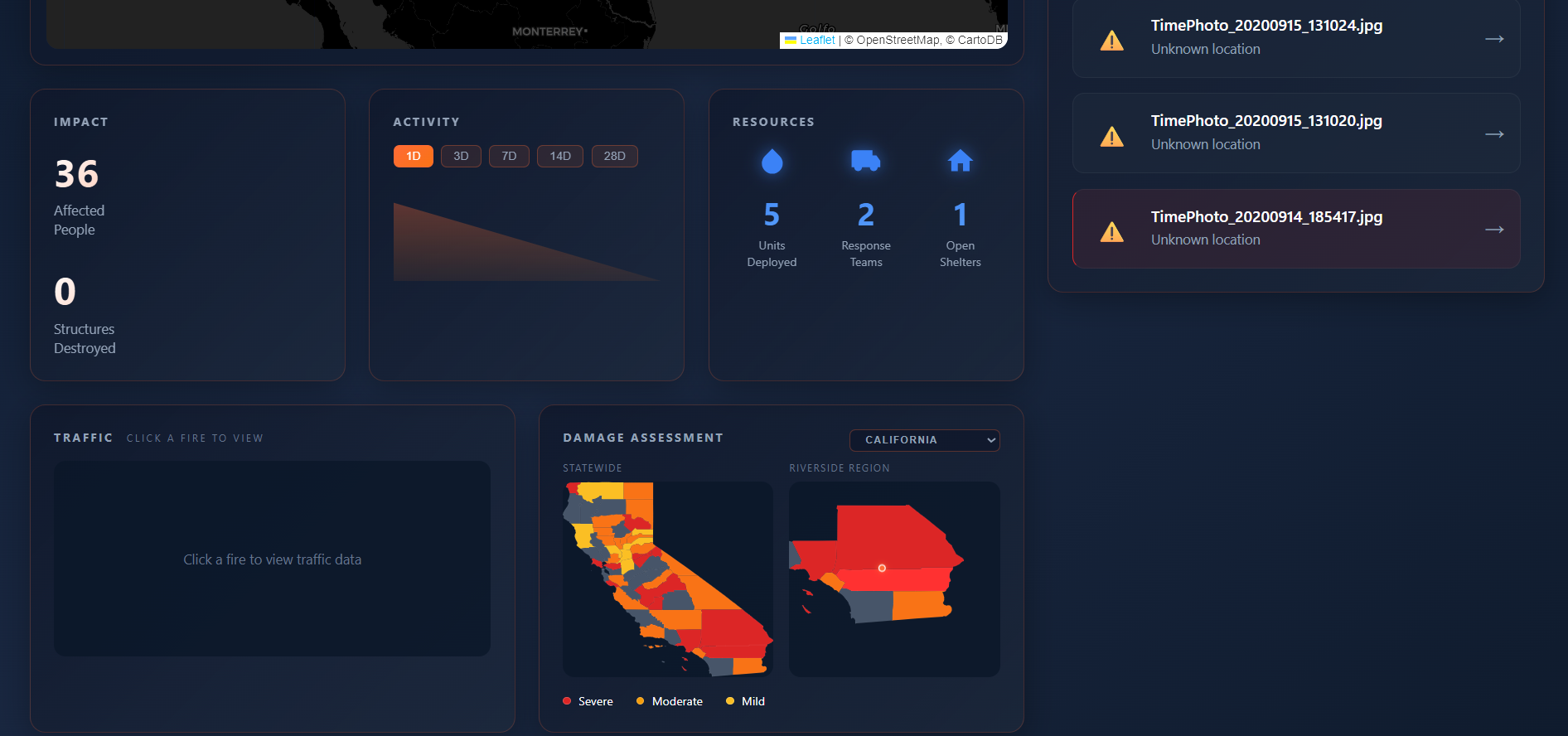
The Mission Control dashboard gives executives and field supervisors a high-level operational overview — blending live mapping, AI insights, and workforce telemetry.
- Interactive Mapbox visualizations with real-time incident feeds
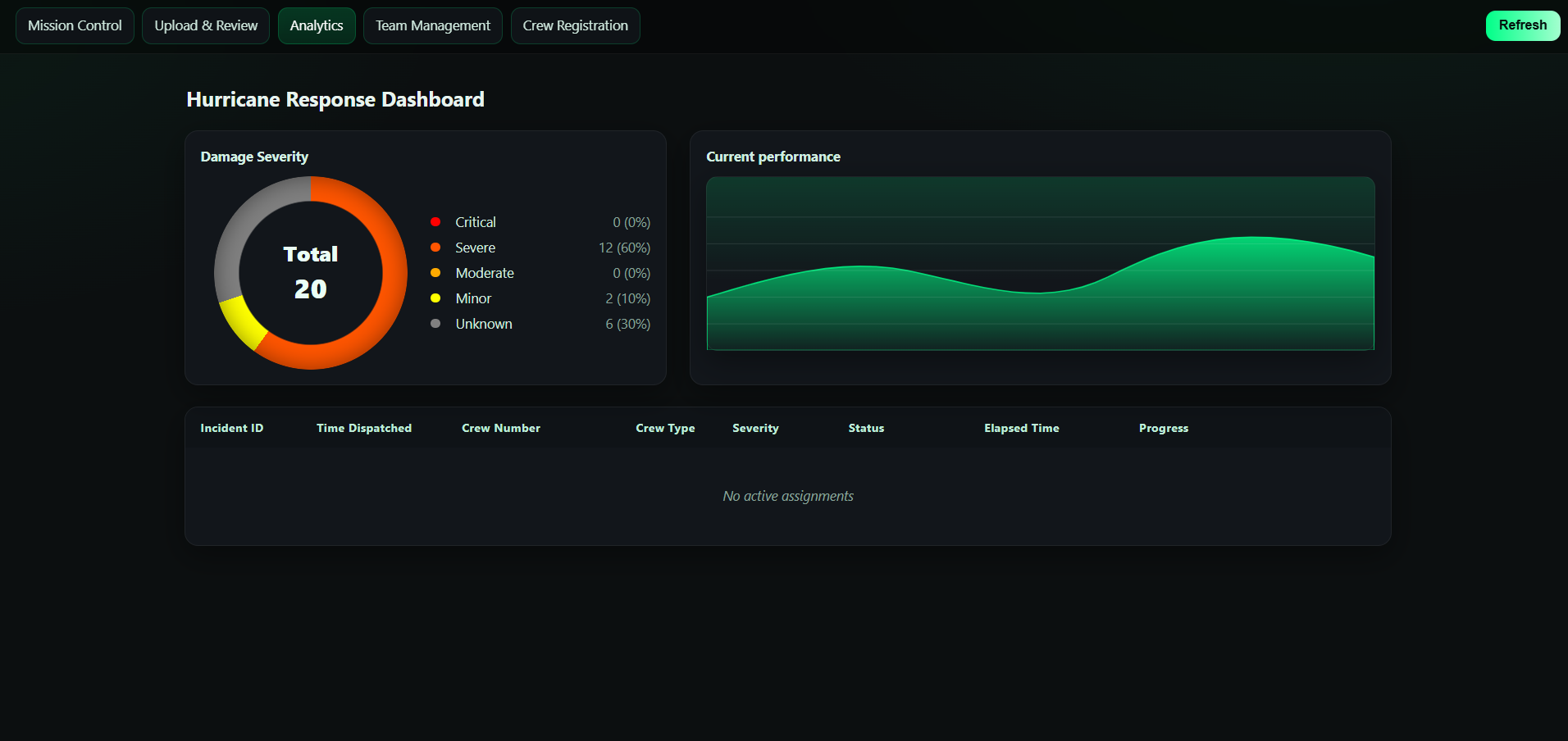
- Dynamic charts showing outages, asset health, and repair velocity
- Role-based access control for utilities, contractors, and government liaisons
The platform was built from the ground up to support multi-agency collaboration, enabling secure sharing of damage intelligence and restoration progress between telecom, electric, and emergency management entities.
Real-Time Crew Analytics
Borrowing from our DisasterSight Analytics toolkit, AxiomDR provides a live operational picture of every crew: location, status, productivity, and safety—streamed directly into Mission Control and exposed via role-based dashboards.
What we track in real time
- Live GPS & breadcrumb trails for each crew vehicle/device with last-seen timestamps
- State timers tied to workflow:
en_route,on_site,completed(usingen_route_started,arrived_at,completed_at) - ETAs & route efficiency (planned vs. actual arrival; idle and dwell time)
- Crew utilization (% in-route/on-task vs. idle), shift adherence, and workload balancing
- Queue aging (oldest incident, mean time waiting, bottlenecks by region)
- MTTA / MTTR (mean time to acknowledge / repair), segmented by
severityand asset type - Safety overlays (weather, flood, wildfire heat) with proximity alerts to crews
- Comms confirmation (Twilio/Slack dispatch receipts and on-scene check-ins)
KPIs decision-makers watch
- Active crews vs. assigned incidents (coverage ratio)
- Critical backlog (count and median age for
critical/severe) - First-response time by district/vendor
- Repair velocity (incidents closed/hour) with trend deltas
- SLA compliance by asset owner and contract
Analytics are computed continuously from the same canonical store that powers the maps:
incidents (locations, severities, timers) + crew updates (GPS, status, notes).
Executive dashboards render live and export to PDF/CSV for regulatory reporting.
Want the full analytics suite? Open the Analytics overview.
Technology Stack
- Frontend: PHP, JavaScript (Mapbox GL JS, Chart.js, React extensions)
- Backend: PHP + MySQL with REST API endpoints
- AI & Automation: Azure Vision, ONNX runtime, Python inference services
- Messaging: Slack Webhooks, Twilio SMS
- Hosting: Bluehost / Apache / SSL with distributed edge caching
AxiomDR is designed for resilience — able to continue ingesting and analyzing disaster data even when conventional networks are partially offline.
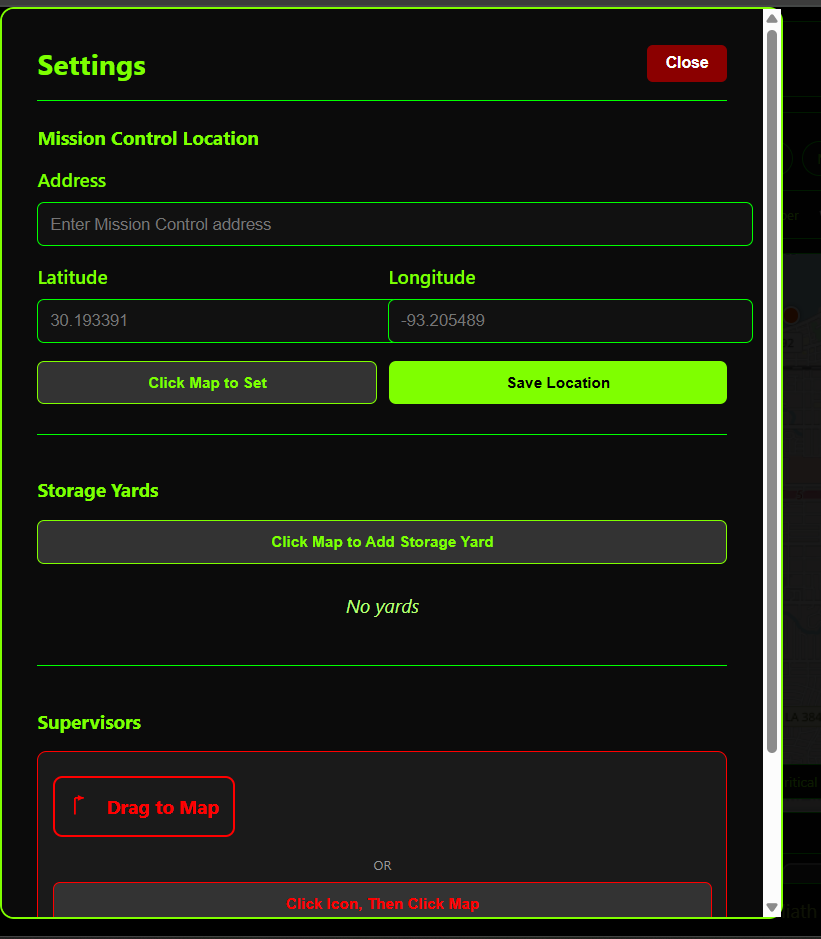
Platform Screens (Preview)
Click any card to preview. In the preview, click the image to open the full-size version in a new tab.